


A specification that is not mentioned very often, but is nevertheless certainly important, is a lamp’s power factor. The power factor is a number between 0 and 1 that indicates the relationship between real power (P) and apparent power (Ps). In the ideal situation, the apparent power is equal to the real power (power factor = 1). In that case, no extra current is needed to make the lamp operate at maximum power. In practice, however, the power factor is never exactly 1.
How does this occur?
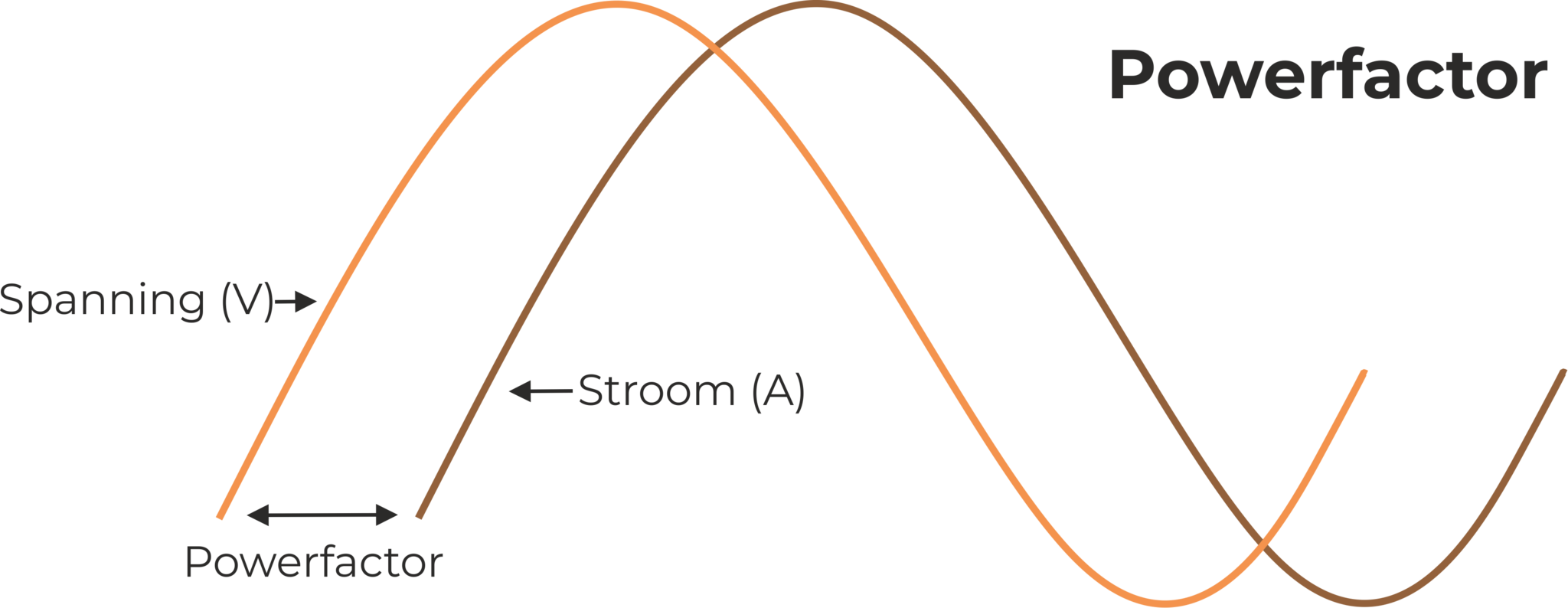
The difference between real power and apparent power is caused by the phase difference between voltage (volts) and current (amps). This may sound a little unclear, but in short, the greater this phase difference, the greater the unwanted power consumption. For example, a power factor of 0.7 means that 30% more current is consumed to achieve the lamp’s intended power. The image below shows what the phase difference between voltage and current looks like.
Why is the power factor relevant?
When you have a lamp with a low power factor, for example 0.5, a large portion (50%) of the power is lost. This is of course a real waste, because you still pay for this electricity! That is why it is also referred to as reactive power ; you do not notice it, but your lamp secretly consumes more power than it should. In recent years, more and more LED lamps have been offered with a power factor of 0.9, which is considered a fairly ideal value. With poor-quality lamps, however, this factor is still considerably lower. Therefore, it is a good idea to check the lamp’s specifications: the higher the power factor, the less power is lost.


